Chunks of bark crunched in Glory’s weathered, gloved palms. She picked up the steel cable and wrapped it around the tree’s trunk. When it clicked in place, she tugged the wire.
She wiped her forehead. Grinning, she said, “First shot.”
Her father told her, “Getting stronger.”
“Thanks, Pa. Where you takin’ it?”
“To the treemaster. Old man pays a good dollar for the hundreds.”
“I’m sure,” Glory said.
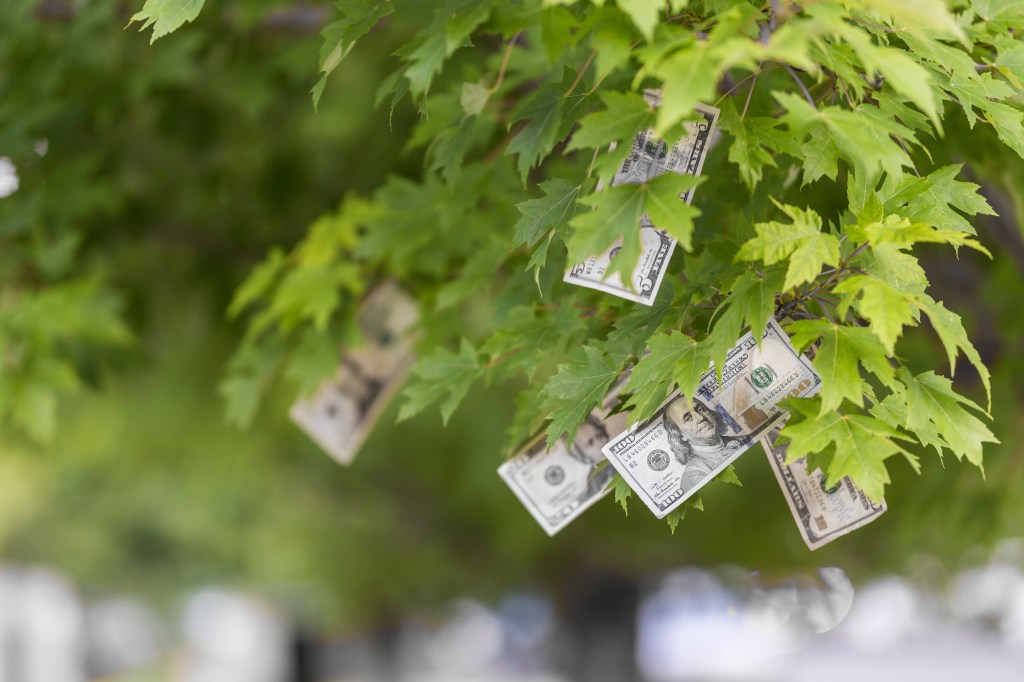
It was their last and oldest hundredth tree. They had been producing pouches filled with hundreds of bills for Glory’s family for over four centuries, but production stopped five years ago. Three years later, the seeds were duds; all of them. Her father sold the farm but kept a few necessities and took work as a lumberjack, harvesting his family’s heirloom to subsist.
Glory pulled off her gloves. Placing the pair under her arm, she kneeled. She cupped the soil. Dark, rich dirt tumbled from her fingers.
“Any luck?”
Glory smacked her lips. “No, Pa. Not even one.” She stood and clapped the dirt from her hands. “It’s strange, Pa. It’s like nothing was planted. Maybe we should call that specialist.”
“We’ve been over this, Coconut. They take and nothing else. I’m not giving them another got damn thing.”
Glory watched her father climb into the truck. The bed rocked, and the motor rumbled on. The crane pulled the stump out and lifted it over the bed. “You’re good.” Glory gave her father a thumbs-up.
As the cable lowered, Glory hopped in the back. The stump dropped. She unhooked the line and leaned by the driver’s seat. “Goin’ to market?”
He frowned. “Yeah. Back soon.” He kissed her forehead.
Later, back at the house, Glory spent the afternoon cleaning and preparing supper. She slid her mitts into place and opened the oven. Roast sizzled with garlic, onions, carrots, and potatoes simmering around.
Glory sniffed. “Yum.” She set the pan on the table.
“Coconut,” her father called. “Come in here for a minute.”
Glory laid her mittens on the dining table and walked through the doorway into the living room as voices sounded beyond. “Yeah.”
“We need to talk, Hun.”
“Hello, Glory. I’m Lance with Agriculture for Change.”
She glanced at her father, then at the tuxedoed man, who was no older than her, maybe by three years. The new arrival sat on their worn sofa, and Glory sat beside her father. “I thought you were goin’ to the market?”
“Hear him out,” her father said in a low voice.
“But—the Hundred. The stump—” Glory stammered, questions tumbling. Her father stayed silent.
She turned to Lance. “What’s going to happen? Folks like you don’t come here for nothing.”
“Sensible too. Excellent. I’ll cut to the offer. We are aware of your family’s financial situation. We’re here not just to negotiate, but also to offer condolences for your loss.”
Mr. Brown reached out his hand. The men shook. “Please. Call me, Gary.”
Lance nodded. “Gary… I know it’s a tough time for you. We’re here to help. Your request to scrape and rebuild is approved— with the one condition.”
Glory gasped. “Pa?”
Gary looked at his daughter, smiled, ruffled her hair, and said, “It was five years ago the first hundred rotted. I didn’t know what to do. Your mama did—she said, “Call a specialist.” So, we did, but the hundreds rotted faster than we thought. It got worse when your mama got sick. No one knew why.” He glanced at Lance, then down at his feet. “Before she died, we signed a contract to help keep the land. Lance is here to see that contract through.”
Glory frowned. “What are you scraping to help us rebuild?”
“Not what, Coconut. You.”
 Kuro's Tales
Leave a comment